


Embark on a journey through the world of siding installation estimates, where we explore the various materials, costs, and factors that play a role in this crucial home improvement process. Get ready to discover the ins and outs of estimating, hiring contractors, and making informed decisions for your siding project.
Types of Siding Materials
When considering siding materials for your installation estimate, it's important to understand the various options available and their characteristics.
Vinyl Siding
- Pros: Affordable, low maintenance, comes in various colors and styles
- Cons: Less durable than other materials, can crack or fade over time
Fiber Cement Siding
- Pros: Durable, fire-resistant, resistant to rot and insects
- Cons: Higher cost upfront, requires painting or recaulking over time
Wood Siding
- Pros: Natural look, environmentally friendly, can be painted or stained
- Cons: Higher maintenance, susceptible to rot, pests, and moisture
Stucco Siding
- Pros: Durable, fire-resistant, energy-efficient
- Cons: Higher initial cost, can crack or chip over time
Brick Siding
- Pros: Extremely durable, low maintenance, excellent insulation
- Cons: Expensive installation, limited design options
Stone Veneer Siding
- Pros: Natural appearance, lightweight, easy to install
- Cons: Higher cost, may require sealing to prevent water damage
Factors Affecting Siding Installation Costs
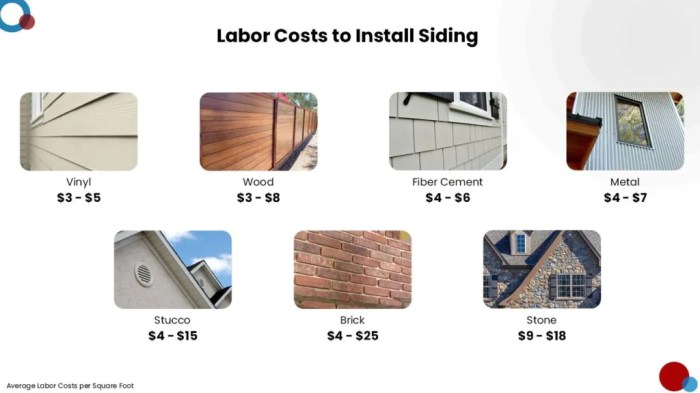
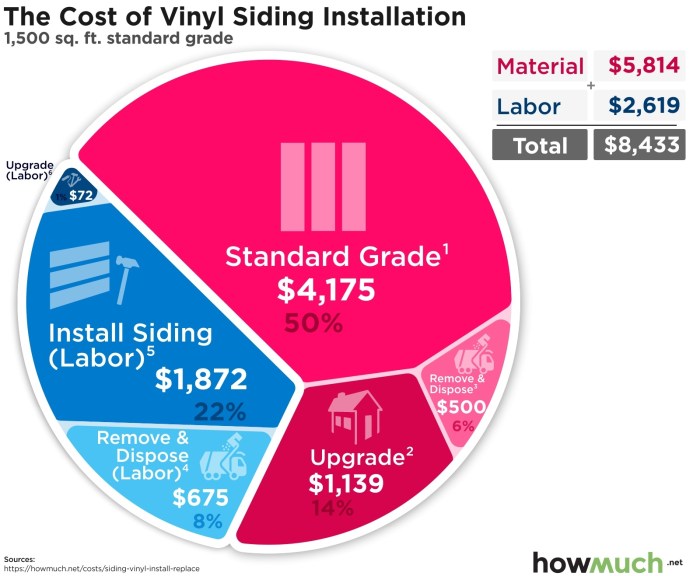
When it comes to estimating the cost of siding installation, there are several key factors that can significantly influence the final price. Factors such as the size of the project, the choice of materials, labor costs, and the location of the property all play a crucial role in determining the overall cost of the installation.
Size of the Project
The size of the project is one of the most important factors that impact siding installation costs. Larger projects typically require more materials and labor, leading to higher overall costs. Additionally, the complexity of the project, such as the number of corners, windows, and doors, can also affect the final price.
Material Choice
The choice of siding material has a significant impact on the overall cost of installation. High-end materials like cedar or fiber cement siding are more expensive than vinyl or aluminum siding. The quality, durability, and maintenance requirements of the chosen material will all influence the final cost.
Labor Costs
Labor costs are another crucial factor in determining the total cost of siding installation. Skilled labor is essential for a successful installation, and labor costs can vary depending on the experience and expertise of the contractors. Additionally, factors like the project timeline and the availability of labor in the area can also affect labor costs.
Location
The location of the property can also impact siding installation costs. Factors such as local building codes, permits, and access to the property can all influence the overall price. Properties in remote or hard-to-reach areas may incur higher transportation costs for materials and labor, adding to the total cost of the installation.
Additional Features
Additional features like insulation, trim work, and the removal of old siding can also affect the total cost of the installation. Adding insulation can improve energy efficiency but will add to the upfront cost. Similarly, intricate trim work or the need to remove existing siding before installation can increase the labor hours and materials required, impacting the overall price.
Estimating Siding Installation Costs
When it comes to estimating siding installation costs, there is a typical process that professionals follow to provide homeowners with an accurate quote. This process involves calculating material quantities, labor expenses, and additional costs to ensure the estimate is as precise as possible.
Calculating Material Quantities
Professionals calculate material quantities by measuring the area of the home that needs to be covered with siding. They take into account the type of siding material chosen and any additional features like corners or windows that may require extra materials.
Calculating Labor Expenses
Labor expenses are determined based on the complexity of the installation, the size of the crew needed to complete the job efficiently, and the time it will take to install the siding. Factors such as removing old siding, preparing the surface, and any customization required will also impact labor costs.
Additional Costs
In addition to material and labor expenses, professionals include additional costs such as waste disposal, equipment rentals, permits, and any unforeseen issues that may arise during the installation process. These additional costs ensure that the estimate covers all aspects of the project.
Importance of Obtaining Multiple Quotes
It is crucial for homeowners to obtain multiple quotes from different siding installation companies to compare prices and services offered. By getting several estimates, homeowners can ensure they are getting a fair price and the best value for their money.
It also allows them to evaluate the professionalism and reputation of each company before making a decision.
Hiring a Siding Contractor
When it comes to hiring a siding contractor for your installation project, it is essential to choose a reputable and reliable professional. The quality of the installation often depends on the expertise of the contractor, so it is crucial to do your due diligence before making a decision.
Checking Credentials, Licenses, and Insurance
Before hiring a siding contractor, it is imperative to check their credentials, licenses, and insurance. This step ensures that the contractor is qualified to perform the work and has the necessary permits to operate legally. Additionally, verifying their insurance coverage protects you from any liabilities in case of accidents or damages during the installation process.
- Ask for proof of licenses and certifications to confirm their qualifications.
- Verify their insurance coverage, including liability insurance and workers' compensation.
- Check for any complaints or disciplinary actions against the contractor with the relevant licensing board.
Questions to Ask Potential Contractors
When interviewing potential siding contractors, asking the right questions can help you gauge their expertise and professionalism. It is essential to communicate effectively and clarify any doubts before signing a contract to ensure a smooth installation process.
- Can you provide references from previous clients?
- What is your experience with the specific type of siding material I want to install?
- How long will the installation process take, and what is the estimated timeline for completion?
- What is the warranty on the work performed, and what is included in the contract?
- How do you handle any unexpected issues or changes during the installation process?
Closing Notes
As we wrap up our discussion on siding installation estimates, remember that proper planning, thorough research, and careful consideration of all factors are key to a successful project. Whether you're a seasoned homeowner or a first-time renovator, this guide equips you with the knowledge to tackle siding installation estimates with confidence.
FAQ Summary
What are the most common types of siding materials used for installation estimates?
Common siding materials include vinyl, wood, fiber cement, and metal. Each has its own advantages and considerations for cost, durability, and maintenance.
How can homeowners effectively compare siding installation estimates?
Homeowners can compare estimates by looking at the breakdown of costs, including materials, labor, additional features, and overall project scope. It's also important to consider the reputation and experience of the contractor.
What factors should homeowners prioritize when hiring a siding contractor?
Homeowners should prioritize checking credentials, licenses, insurance, and references of the siding contractor. It's also essential to communicate clearly about project expectations and timelines.